Paul D. Adams
| CV | Publications | CCI Group Members | BioE 225 |

Senior Scientist, Lawrence Berkeley Laboratory
Adjunct Professor, Dept. Bioengineering, U.C. Berkeley
Vice President for Technology, the Joint BioEnergy Institute
Laboratory Research Manager, ENIGMA Science Focus Area
Office: Building 91, Room 410, Lawrence Berkeley Laboratory
Email: PDAdams@lbl.gov or pdadams@berkeley.edu
Phone: 510-486-4225
Fax: 510-486-5909
Paul Adams @ Google Scholar
Paul Adams @ Publons
Paul Adams @ PubMed
|
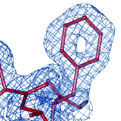
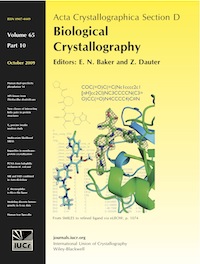
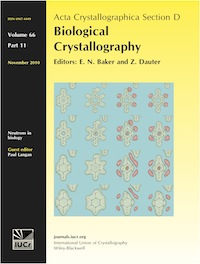
Computational Methods Development Much of my research is focused on the development of new algorithms and methods for problems in structural biology. In collaboration with researchers from Los Alamos National Lab, Duke University and Cambridge University we have developed a new software system with NIH Program Project funding and industrial funding, called PHENIX, for the automated solution of macromolecular structures using crystallographic methods. With other NIH funding we have expanded the scope of PHENIX to include the analysis of neutron diffraction data. |
 |
|
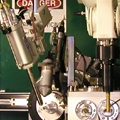
Accelerator Resources for Structural Biology I help coordinate the biosciences activities at the Advanced Light Source. An area of particular interest to me is the structural study of large macromolecular machines combining multiple experimental and computational methods. |
 |
|
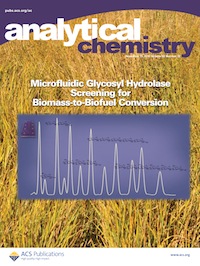
Bioenergy Research The need to develop carbon-neutral and renewable sources of energy has become a priority. The conversion of cellulosic (plant) material to advanced biofuels has the potential to provide a significant fraction of transportation fuel in the future. As part of the Joint Bioenergy Institute I am developing new technologies to improve the conversion of biomass to fuels. We have also developed new methods for the chemical imaging of plant cell wall material. |
 |
 |
 |
 |
 |
 |
 |
 |
 |
 |
||
 Privacy and Security Notice Privacy and Security Notice
|
Comments and credits |